
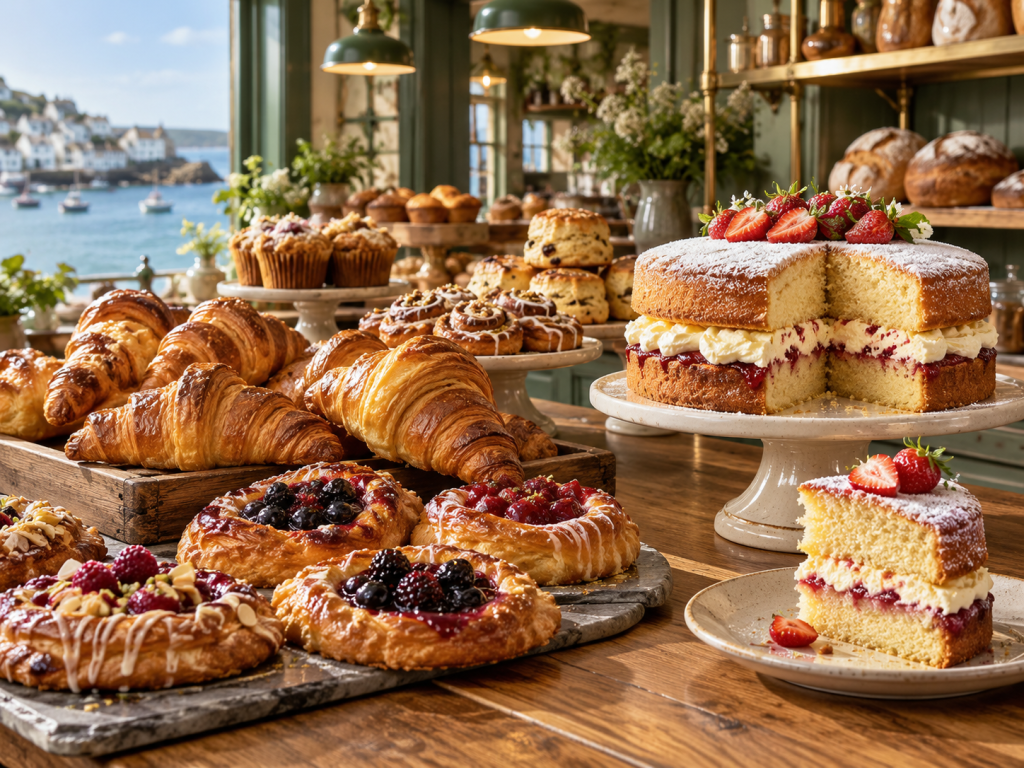
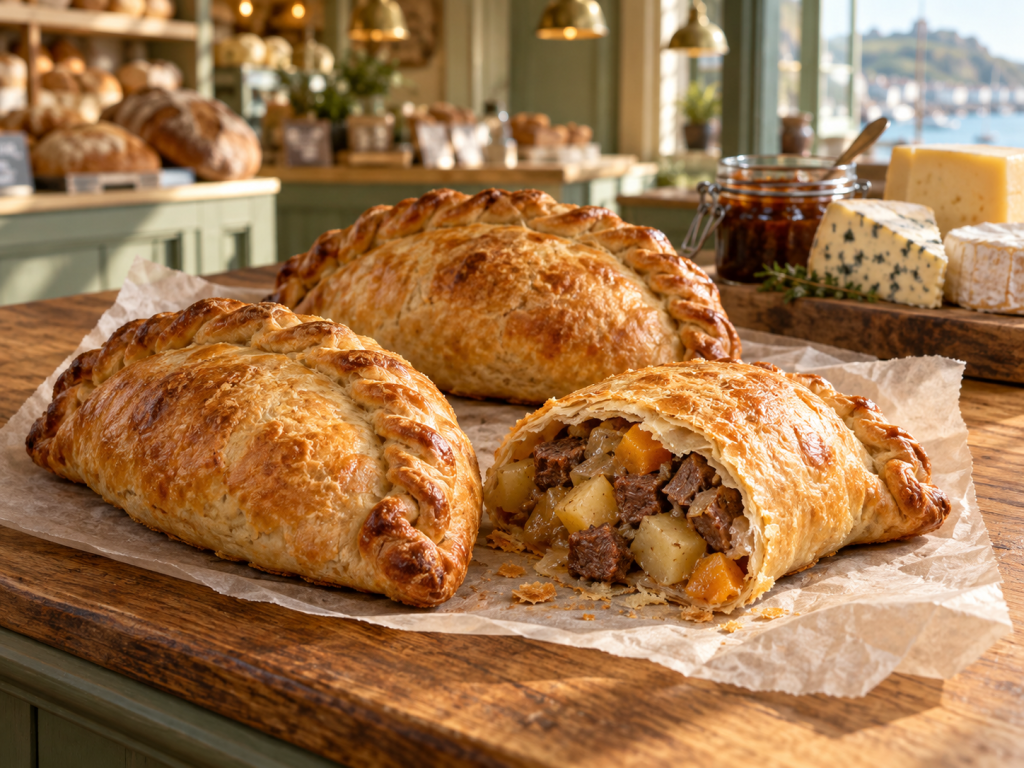
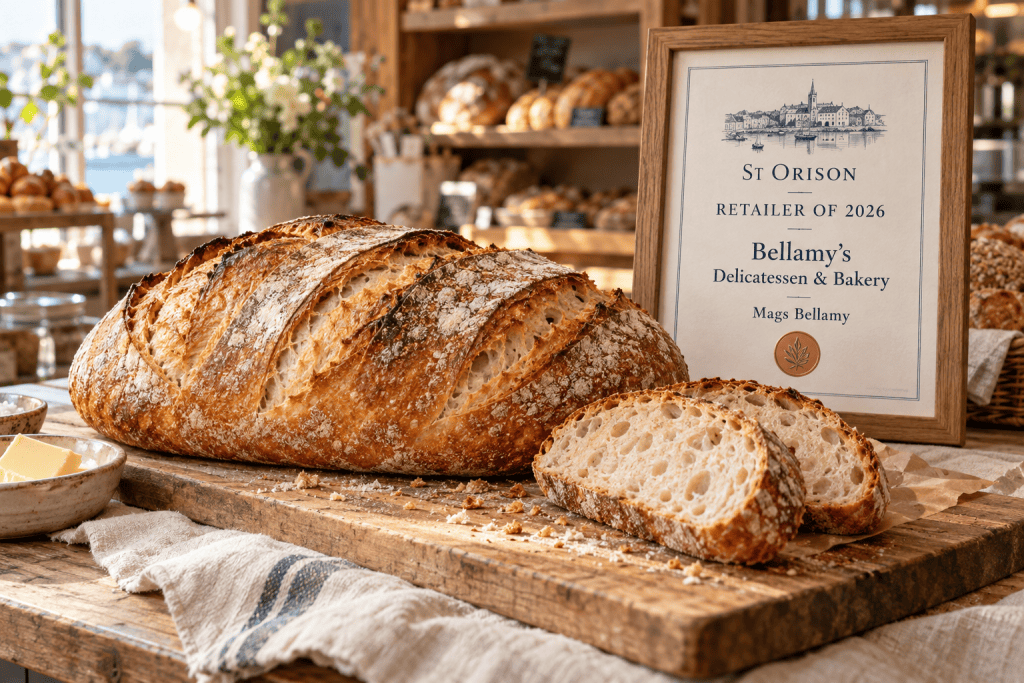
Behind the green-painted shopfront on St Orison’s High Street, Mags Bellamy brings together good food and a familiar welcome. At Bellamy’s Delicatessen & Bakery, golden loaves share the window with pastries, cakes and Cornish pasties. Named St Orison Retailer of 2026, Mags opens her kitchen to share the sourdough bloomer that has become a favourite at her counter.
A High Street favourite
For Mags Bellamy, the pleasure of shopkeeping lies as much in the people as in the food. Regulars arrive for their usual loaf, visitors pause at the window, and a quick trip for something for lunch becomes a conversation across the counter.
Over the years, Bellamy’s has grown into a familiar part of High Street life—a place for everyday provisions, something for a celebration, or a small treat carried home in a paper bag. Its 2026 retailer award celebrates the whole shop: the care behind the counter, the tempting displays and the welcome that brings people back.
From the oven to the counter
Bread gives the bakery its daily rhythm. There is dough to tend, loaves to shape and a window to fill before the day gathers pace. Alongside the sourdough sit buttery pastries, generous slices of cake and Cornish pasties for a harbour-side lunch.
Mags’ sourdough bloomer is a loaf made for sharing: a golden crust, a soft, open crumb and plenty of flavour. Below, she shares a home-kitchen version, with time for the dough to develop and clear steps to follow. Save a couple of slices for tomorrow’s toast—if there are any left.
Bake Mags’ Sourdough Bloomer
Makes one generous bloomer. Begin the day before you plan to bake, using an active sourdough starter that has been fed and is bubbly and risen.
Ingredients
- 500g strong white bread flour
- 325g lukewarm water
- 100g active sourdough starter, maintained with equal weights of flour and water
- 10g fine sea salt
- Extra flour for shaping and dusting
Method
- Mix the dough. Stir the starter into the water, then add the flour. Mix until no dry flour remains. Cover and leave for 30 minutes.
- Add the salt. Sprinkle the salt over the dough and work it in with damp hands, gently squeezing and folding until evenly combined.
- Build strength. Over the next two hours, give the dough four sets of folds, roughly 30 minutes apart. Lift one edge, stretch it gently upwards and fold it over the centre. Turn the bowl and repeat on all four sides. Keep covered between folds.
- Let it rise. Leave covered until the dough looks aerated, feels lighter and has risen by roughly half. This may take several more hours, depending on the warmth of your kitchen and the strength of your starter. Follow the dough rather than the clock.
- Shape the bloomer. Turn onto a lightly floured surface and gently shape into an oval loaf. Place seam-side up in a well-floured proving basket or a bowl lined with a floured tea towel. Cover and refrigerate overnight, for 8–12 hours.
- Heat the oven. The next day, preheat to 240°C / 220°C fan, with a lidded cast-iron casserole inside, for 30 minutes. Choose a casserole large enough for the loaf and suitable for this temperature.
- Bake. Turn the dough onto baking parchment and slash the top with a sharp blade. Carefully lower it into the hot casserole. Cover and bake for 20 minutes. Remove the lid, reduce to 220°C / 200°C fan, and bake for another 25–30 minutes, until deeply golden.
- Let it cool. Transfer to a wire rack and leave for at least two hours before slicing, allowing the crumb to finish setting.
Mags’ tip: Give your dough time, especially in a cool kitchen. Look for a gentle rise and little bubbles rather than watching the clock. And save a slice for tomorrow—this bloomer makes lovely toast with butter and marmalade.