OLD STORIES. LIVING TRADITIONS.
For generations, the people of St Orison have carried stories, customs and symbols shaped by the sea, the land and those who came before them. Some are rooted in history, others in folklore — and many remain part of everyday life in the town.
The Three Knots
Custom · Memory · St Orison Tradition
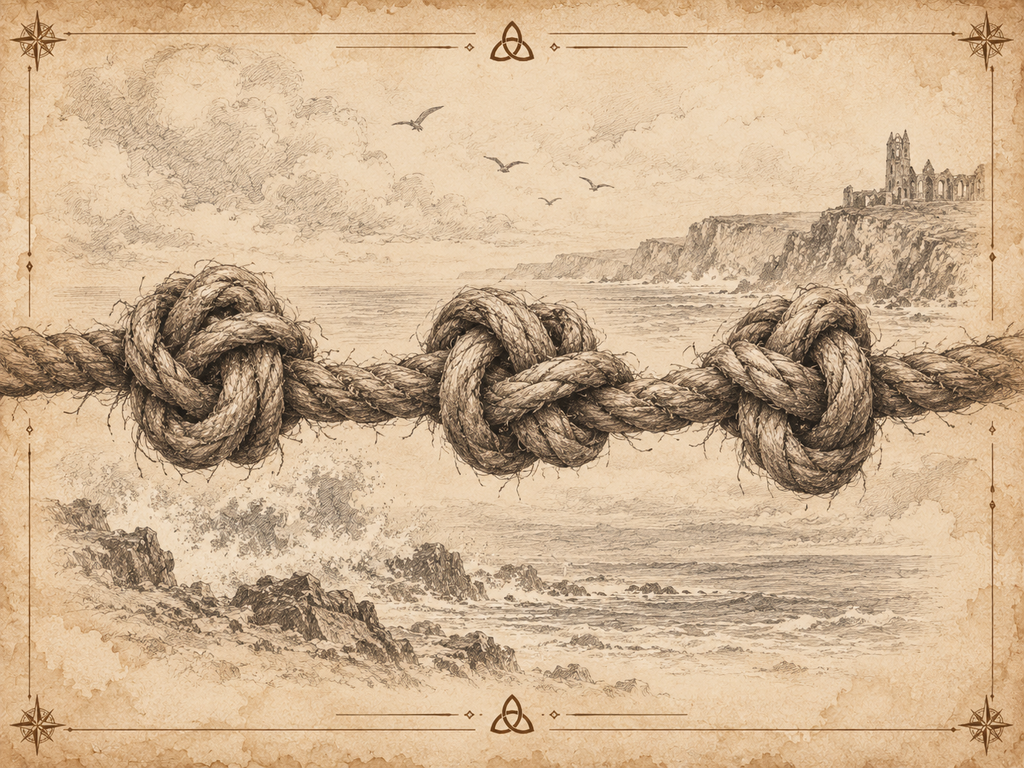
For generations, fishermen’s wives were said to keep or tie a three-knot cord as a charm for those going to sea. Each knot carried a simple meaning: hold to home and those waiting for you; balance what you take from the sea and do not strip it bare; return safely to harbour.
Over time, the meaning widened beyond fishing. The three knots became a reminder of restraint, responsibility and safe return — values that continue to appear throughout St Orison’s customs, stories and symbols.
The Cursed Knots
When the Knots were Broken
For generations, the Three Knots symbolised protection, hope and safe return. Hold. Balance. Return.
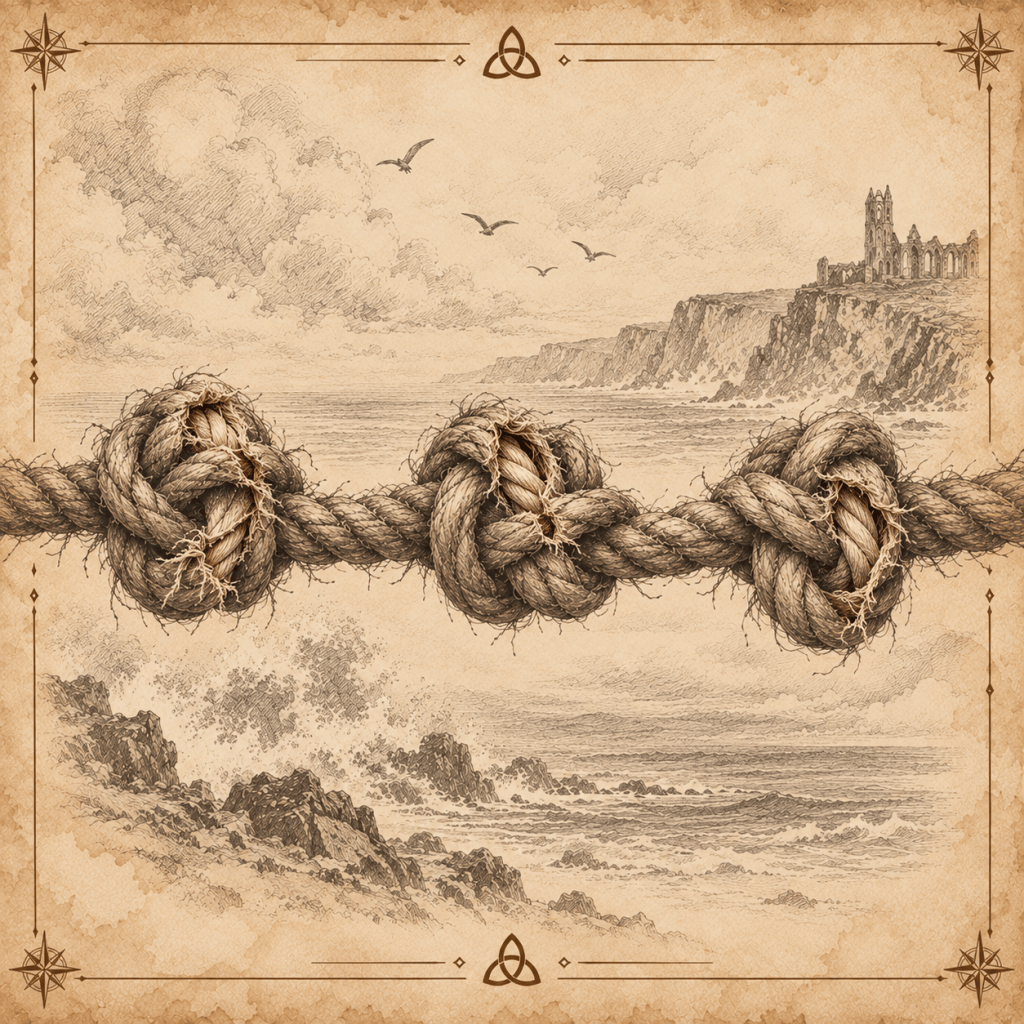
But at Blackthorn Workhouse, the feared Keeper of the Keys, Jacob Crowley, deliberately desecrated these cherished charms. He split open the knots, exposing their inner fibres without severing the cord, and returned them to their owners.
What had once represented protection became a symbol of fear and suffering. Locals came to know them as the Cursed Knots.
Whether a curse truly followed, or whether the evil lay in Crowley’s actions, remains part of St Orison’s darker folklore.
Hagstones
Custom · Memory · St Orison Tradition
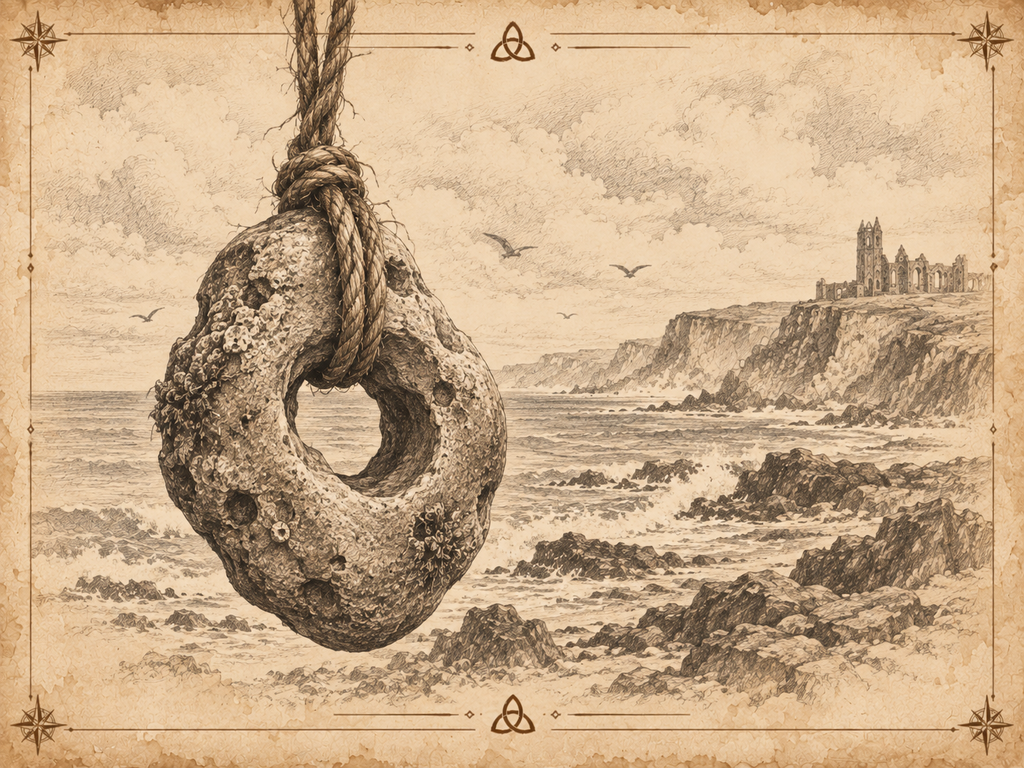
A hagstone is a naturally holed stone, shaped over time by water and weather. Found along the coast and long associated with protection, they are often kept as charms, hung by doors or carried as tokens of luck. In St Orison, hagstones are part of the town’s folklore — small, weathered objects that connect the sea, memory and the quiet beliefs carried from one generation to the next.

The Returning Light Emblem
Guidance · Homecoming · St Orison Tradition
Carved into the stonework of St Orison Priory is one of the town’s oldest and most enduring symbols: an open flame above three short lines representing the sea.
The flame is traditionally understood as a light of guidance — something seen from offshore and associated with finding the way home. Beneath it, the three lines place that light firmly within St Orison’s maritime history, linking the emblem to generations whose lives depended upon the coast, the weather and the safe return of those at sea.
The Markers
Stone · Shoreline · St Orison Tradition
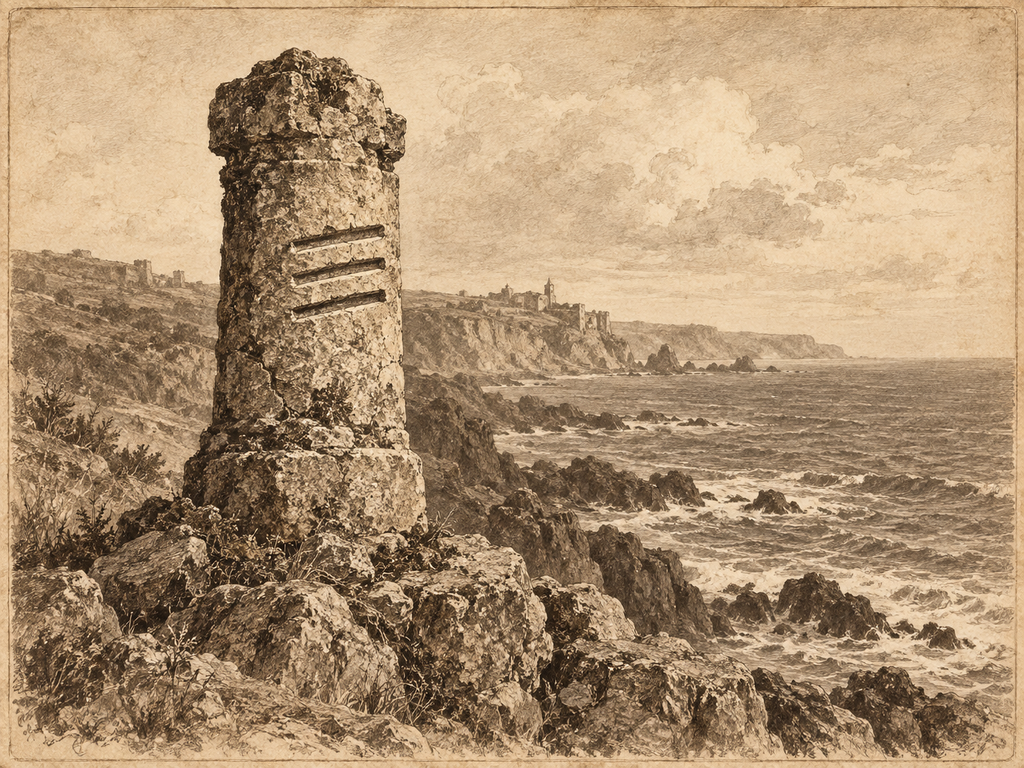
Along parts of St Orison’s older shoreline stand a series of weathered stone markers whose original purpose has long since been lost to time. One of the most distinctive survives towards the eastern edge of the shore, close to the rocks and exposed to generations of salt, wind and tide.
Each marker is formed from an ancient stone column, its surface worn and uneven. Carved into the face are three short horizontal lines — a simple repeated symbol that appears elsewhere in St Orison’s history and traditions. Whether the marks were intended as a boundary, a warning, a navigational sign or something more ceremonial has never been fully established.

Brother Orison
13th-Century Friar · Porthmerren · St Orison Tradition
In the 13th century, the coast now occupied by St Orison was home to Porthmerren, a small settlement clustered around the shore and dependent upon the sea.
Brother Orison was a friar whose life became closely associated with Porthmerren, its people and the priory above the coast. Over generations, his name became increasingly bound to the settlement and its harbour, eventually contributing to the transition from Porthmerren to Orison Harbour, and later to the town known as St Orison.
Lighting the Way
Custom · Priory · St Orison Tradition
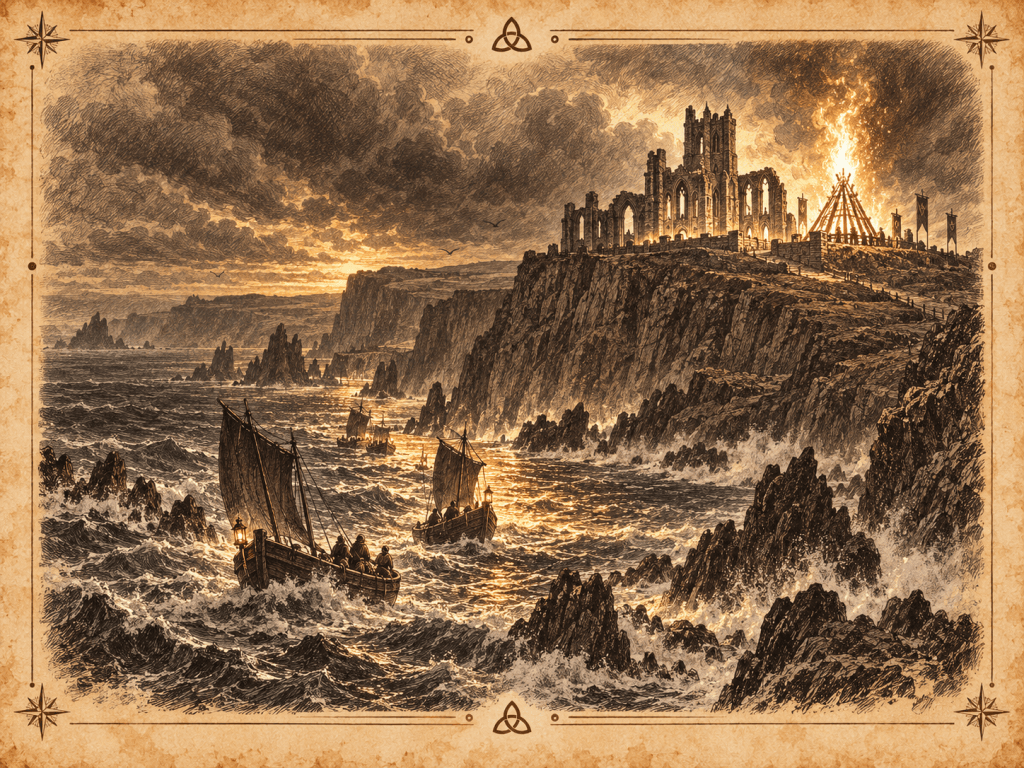
Each year on All Hallows’ Eve, St Orison remembers the man whose light came to mean safety, hope and homecoming. The tradition began after the death of Brother Orison, in gratitude for the beacon he established following the great maritime disaster that claimed three of Porthmerren’s four fishing boats. In the years that followed, the fire he tended from the priory heights guided many more vessels safely through storms and dangerous waters, and the villagers vowed that his light would never be forgotten. Centuries later, families still place lamps and candles in their windows as darkness falls, while townspeople gather below the priory carrying lanterns of their own. In a long, quiet procession they make their way up the hill, following the same path towards the ridge, where a great fire is lit once more — a symbol of remembrance, thanksgiving, and the enduring promise that a light will always be left burning for those still at sea.

The Priory & Beacon
Custom · Priory · St Orison Tradition
Long before St Orison had its modern lighthouse, the priory ridge served a far more practical purpose. A beacon was maintained high above the bay, visible from the sea and used to guide vessels towards safer water during darkness, fog and Atlantic storms.
For generations it helped sailors identify the harbour approach and avoid the reefs and rocks that made the coastline so dangerous. The beacon eventually gave way to the modern lighthouse, but the ridge remained one of St Orison’s most important points of navigation — both for those at sea and those looking homeward.
Porthmerren · Orison Harbour · St Orison
Origin · Porthmerren · St Orison
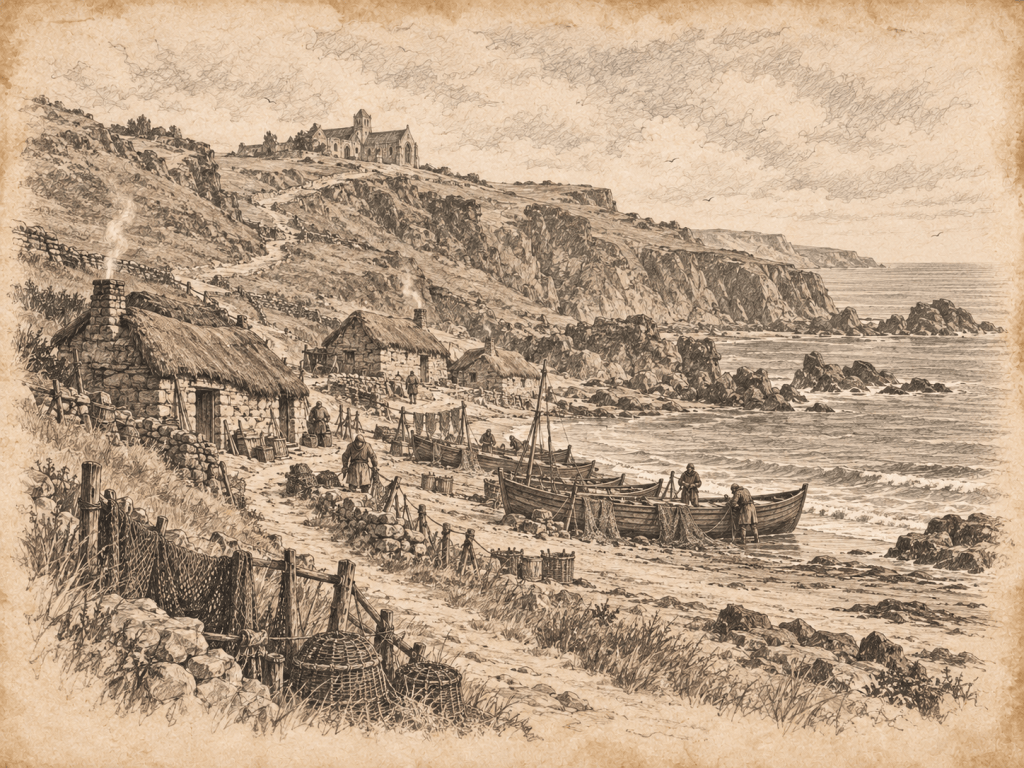
Before it was St Orison, the settlement was known as Porthmerren — a small coastal community of fishermen’s cottages, narrow paths and simple dwellings gathered below the ridge. As the harbour grew in importance, the settlement expanded and became known as Orison Harbour, reflecting its increasing role as a place of trade, shelter and seafaring life. Over time, the town continued to develop beyond the harbour itself, and the wider settlement gradually became known as St Orison. Though the name changed across the centuries, traces of each era remain in the town’s walls, streets, customs and stories.
The Harbour Blessing
Origin · Porthmerren · Orison Harbour
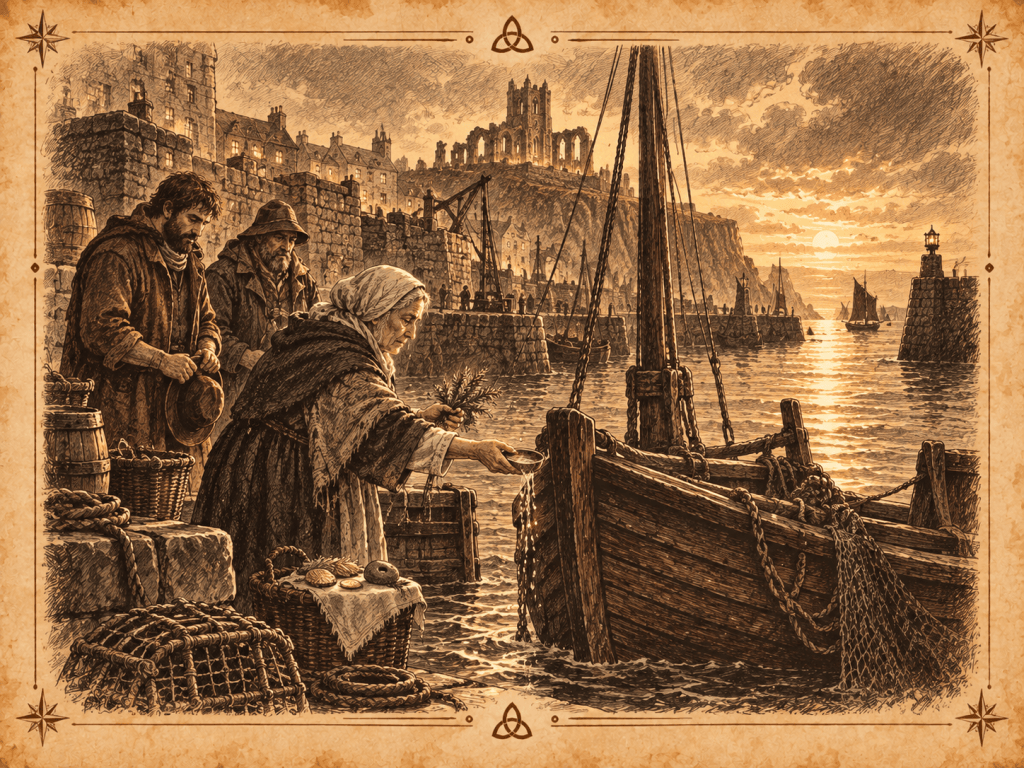
Before boats leave St Orison Harbour, some families still observe a small custom known as the Harbour Blessing. It is rarely formal and almost never announced, but it survives in quiet gestures passed down through generations: a touch of seawater to the bow, a hand laid on the gunwale, a murmured word, or a small token carried aboard.
Older harbour families speak of sprigs of rosemary, a coin, a shell, or a hagstone kept for luck and safe return. For some it is habit more than ceremony; for others it remains an act of respect — for the sea, for those who make their living from it, and for the understanding that no voyage should begin carelessly.
Though the blessing is most closely tied to fishing boats and working vessels, it is still remembered whenever a new boat is launched, a first trip is taken, or someone feels the need to ask for calm water and a safe return home.
The Gatherings & the Sisterhood
Origin · Porthmerren · St Orison
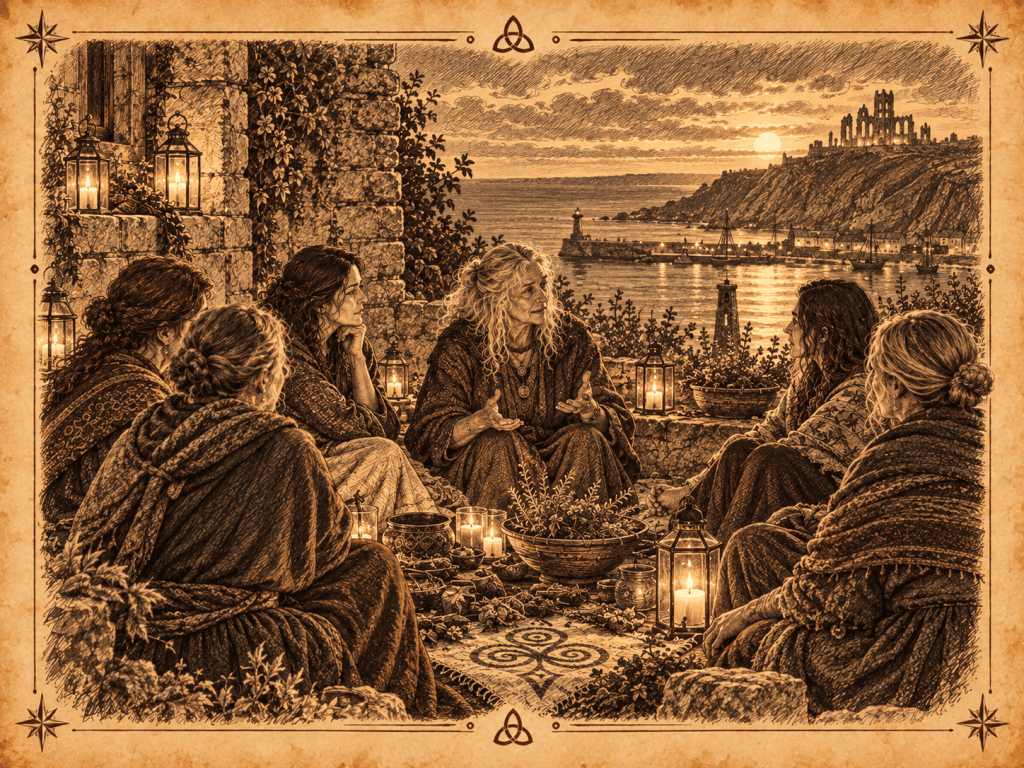
Among the older traditions of St Orison, few are spoken of more carefully than the Gathering. In its simplest sense, the Gathering refers to women meeting quietly, often in small numbers, to share knowledge, remembrance, practical wisdom and the older customs of the town. In time, this tradition became associated with what many came to call the Sisterhood.
To some, the Sisterhood was no more than a continuation of female fellowship: women keeping company, passing on remedies, stories, warnings and small rituals that sat outside the official life of church, harbour and town council. To others, it suggested something deeper — a line of memory and understanding that survived through symbols, gestures and traditions not easily explained.
In St Orison, the Gathering and the Sisterhood are often spoken of as if they are one and the same. Whether viewed as custom, kinship or quiet guardianship, they remain part of the town’s older identity, woven into its lore but never fully defined.
Whispers of St Orison

The Tide Turning
Some things are best decided when the tide turns.
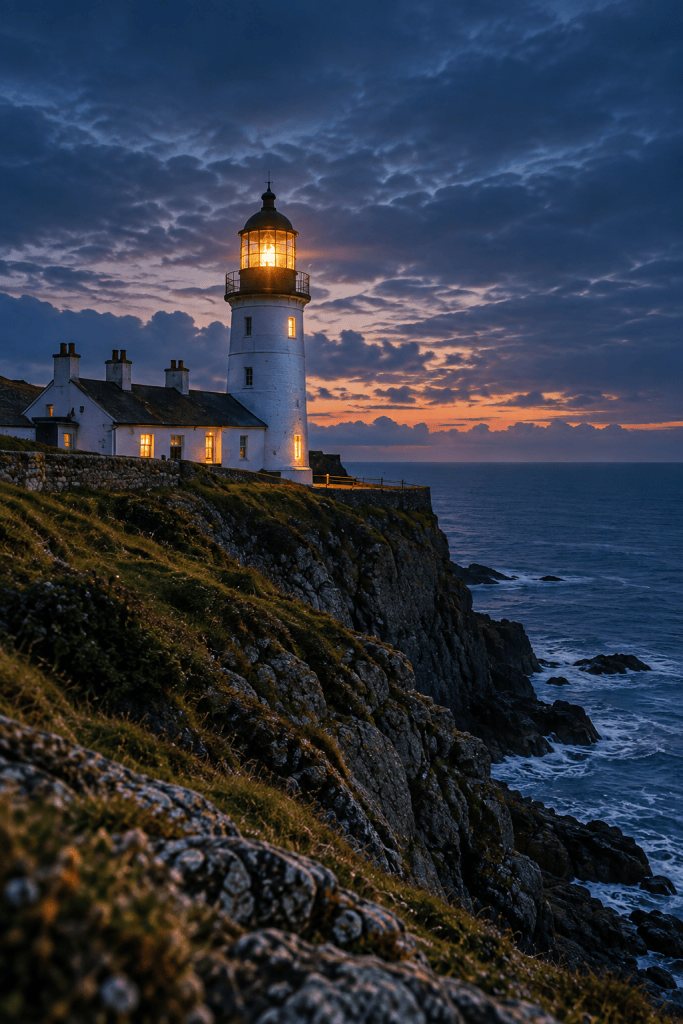
The Keepers’ Light
A light left burning for those still finding their way home.
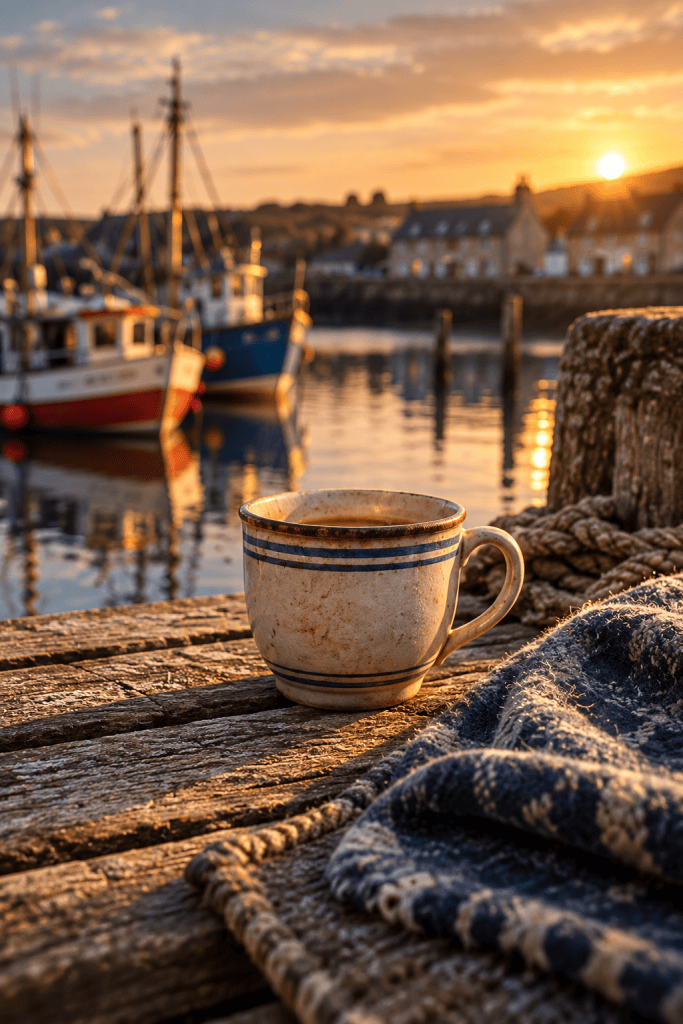
The Fishermen’s Welcome
No one returning from the sea should find an empty cup.

The First Light
There are mornings when the old people still watch the horizon.